Action Research

Developing effective listening skills enhances understanding and helps students to avoid repetitions, going out of content or taking inappropriate action.
Title slide: Developing effective listening skills enhances understanding and helps students to avoid repetitions, going out of content or taking inappropriate action
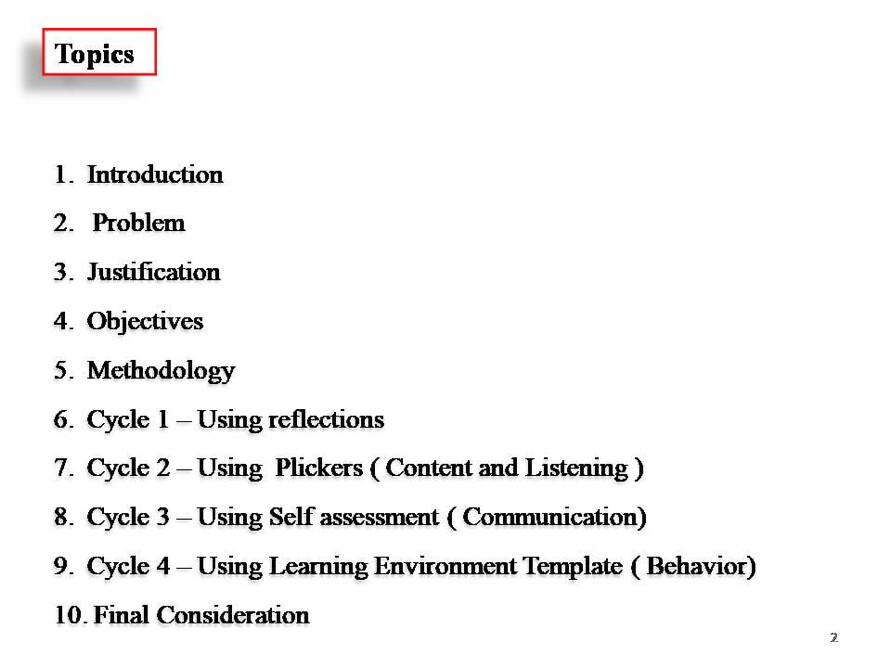
Topics: introduction, problem, justification, objectives, methodology, cycles 1 to 4 and final consideration
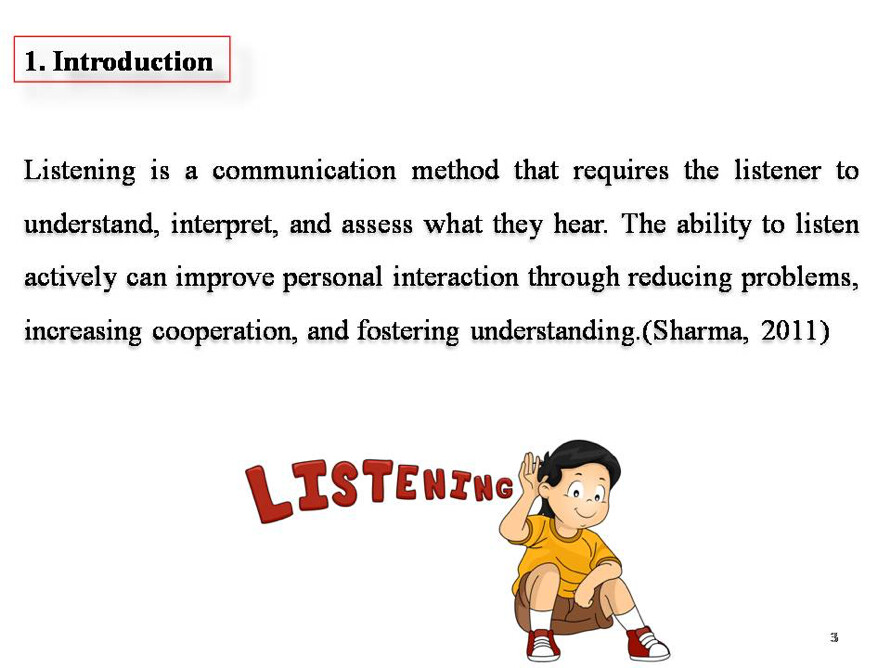
1. Introduction: listening as a communication method
2. Problem: low levels of listening observed in classes
The research question: how can I develop effective listening skills that enhance understanding and help students avoid repetitions, going out of content or taking inappropriate action?
3. Justification: personal, academic and social reasons
4. Objectives: main objective and specific objectives
4. Methodology: sample and participatory action research
Instruments for action research
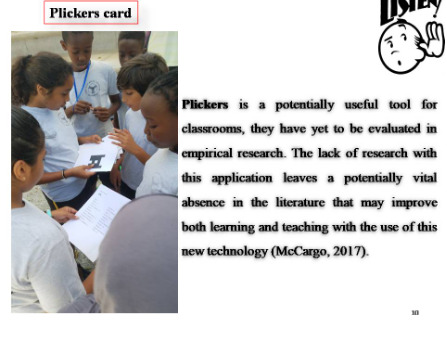
Plickers card and how Plickers is used in the classroom
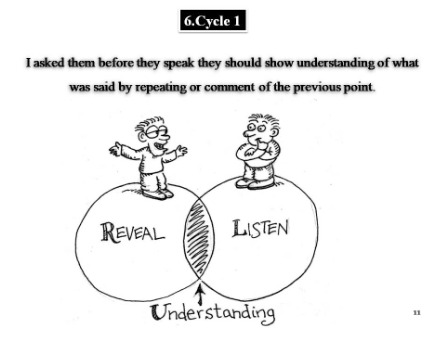
6. Cycle 1: reveal and listen create understanding
Cycle 1: observing behaviour for two weeks and combining strategies with reflections
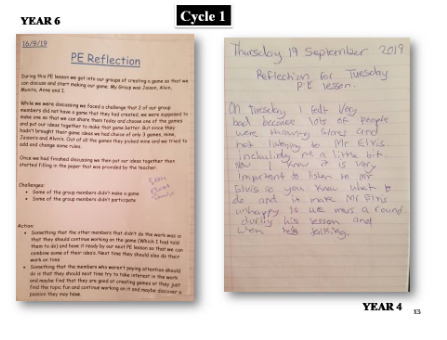
Cycle 1: Year 6 and Year 4 student reflections
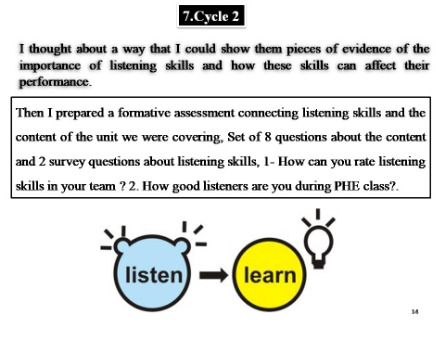
7. Cycle 2: using Plickers to connect listening skills with the unit content
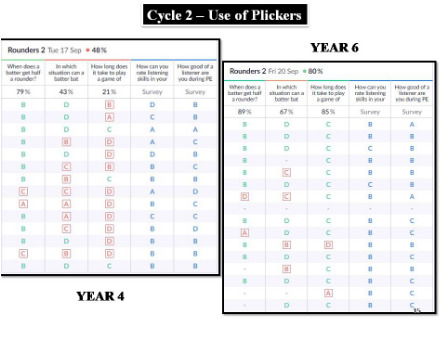
Cycle 2: use of Plickers, results for Years 6 and 4
Cycle 2: sharing the results with students
8. Cycle 3: use of a software package (SPSS)
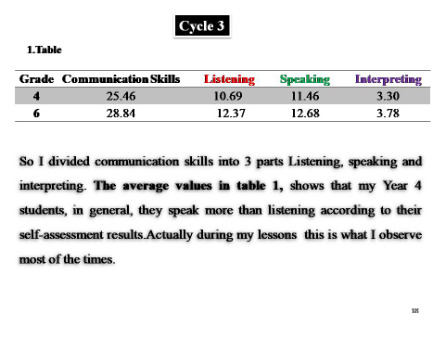
Cycle 3: table 1, communication skills by grade
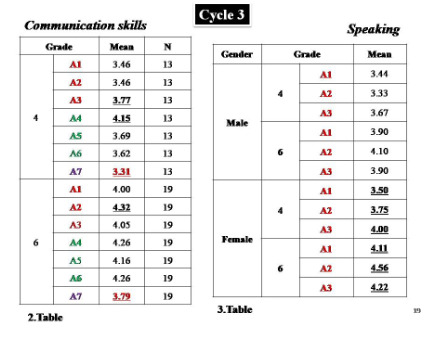
Cycle 3: communication skills tables for listening, speaking and interpreting
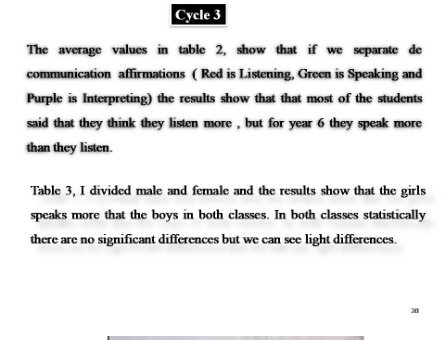
Cycle 3: average values by grade and gender
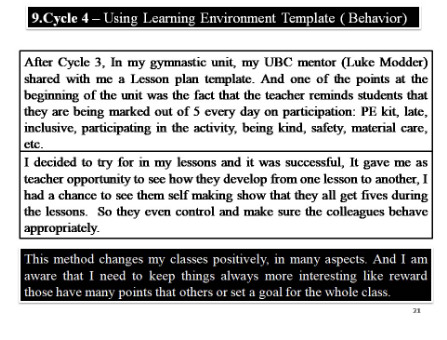
9. Cycle 4: using a learning environment template (behaviour)
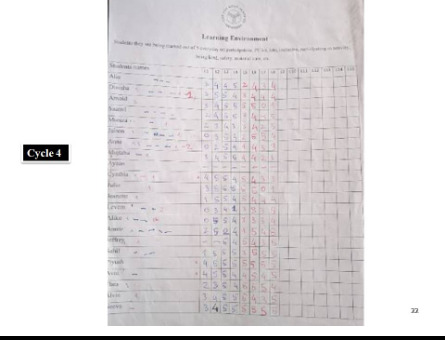
Cycle 4: completed learning environment template
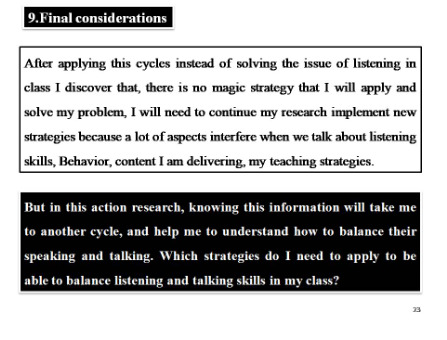
9. Final considerations
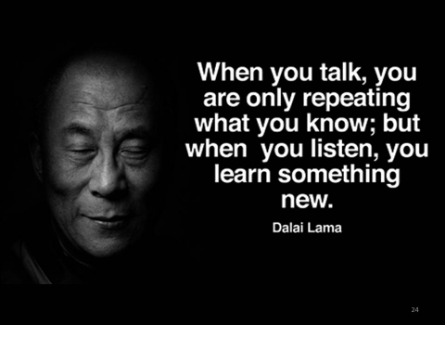
Quote: When you talk, you are only repeating what you know; but when you listen, you learn something new. Dalai Lama